
The Best Time to Replace Roof on Martha's Vineyard and Cape Cod: A Seasonal Guide for Homeowners
Timing is everything in coastal home maintenance. On Martha's Vineyard and on Cape Cod, where Atlantic weather swings between frozen January nor'easters and humid August heat, knowing when to schedule a roof replacement is not just a planning convenience. It directly affects the quality of the installation, the availability of skilled contractors, and what you'll pay for the work. This guide walks through each season with an eye on coastal conditions that simply don't apply to the mainland. If your roof has been on the back of your mind, this is where to start.
Understanding Roof Lifespan
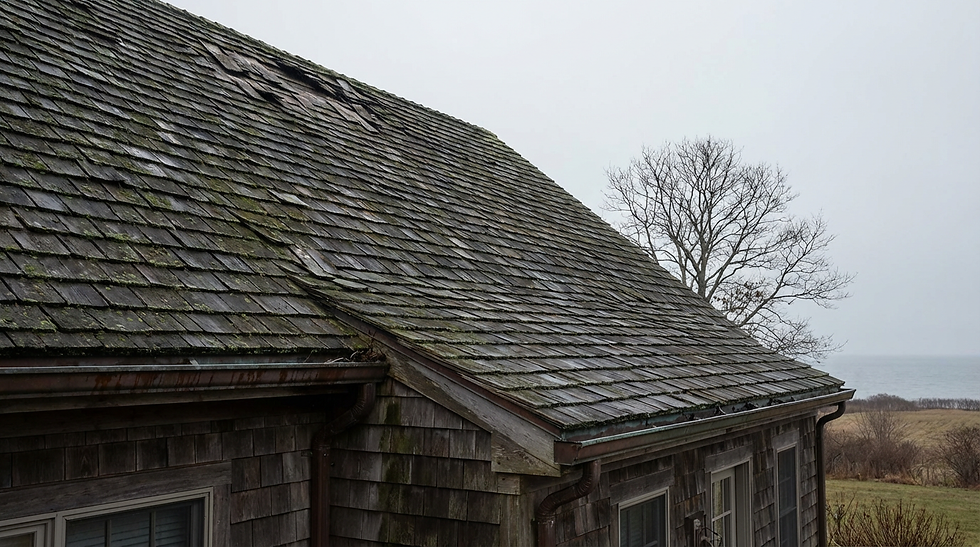
Most homeowners inherit a vague sense of when a roof "should" be replaced, often based on what the previous owner said or what a general contractor mentioned in passing years ago. On Martha's Vineyard and on Cape Cod, those timelines tend to compress. The combination of salt air, wind-driven rain, freeze-thaw cycling, and humid summers accelerates the deterioration of roofing materials in ways that standard manufacturer warranties don't fully account for.
A standard three-tab asphalt shingle roof rated for 20 to 25 years in the Midwest may realistically perform for 15 to 18 years on a coastal New England property, particularly on exposed south- or southwest-facing slopes. Architectural shingles fare somewhat better, and premium systems such as standing seam metal can outlast them by decades. For a deeper look at material longevity factors in coastal environments, this overview of roof lifespan variables is worth reading before committing to any replacement decision.
The point is not to alarm property owners but to recalibrate expectations. A roof that looks passable from the street may already be managing water poorly at the flashing details, along the valleys, or beneath the surface of the decking. Lifespan is not a warranty countdown. It's a range shaped by installation quality, material selection, maintenance history, and exposure severity.
Signs You Need a New Roof
Visible Damage and Wear
The most obvious indicators show up on a slow walk around the property. Curling shingles, whether they're cupping at the edges or clawing upward in the middle, mean the material has reached the end of its flexibility. Cracked or missing shingles create direct pathways for water. Dark streaking is usually algae or moss, both of which trap moisture and accelerate surface degradation. Granule loss, visible in gutters or downspout runoff, means the UV-protective coating is gone.
On coastal properties, wind damage deserves particular attention. A storm that may not make headlines can still lift tab edges, break seals, or deposit debris that stays wet for days. After any significant weather event on Martha's Vineyard or on Cape Cod, a visual roof check from the ground, and ideally a closer look from a contractor, is worth doing. The post-storm inspection framework here covers the specific checkpoints that matter most for coastal exposure.
Age of the Roof
If the roof was installed more than 15 years ago and has not been comprehensively inspected since, age alone is a meaningful risk factor on a coastal property. That doesn't mean an automatic replacement, but it does mean a thorough professional assessment is overdue. Shingles in their later years lose the ability to shed water cleanly and begin to fail in subtle ways that only appear as interior damage after the fact.
Ask for documentation. If the previous owners have no records, a reliable contractor can often estimate installation date from shingle style, manufacturer markings, and wear patterns. Millers Pro Roofing & Siding regularly performs these assessments as part of pre-season evaluations, especially for second-home owners who aren't on the island year-round.
Frequent Repairs
There is a point at which continued patching stops making financial sense. One repair here, one flashing replacement there, and a couple of emergency calls after storms can quietly accumulate into costs that approach half the price of a full replacement without delivering a full replacement's protection. If you have called a roofer more than twice in three years for the same roof section, that pattern is telling you something. The hidden cost trajectory of deferred repairs is more predictable than most homeowners realize.
Seasonal Breakdown: Finding the Best Time to Replace Roof on the Cape and Islands
Spring: The Ideal Time
On Martha's Vineyard and on Cape Cod, late spring, specifically May and early June, represents one of the most favorable windows for roof replacement. Temperatures are climbing into the range where asphalt shingles seal properly, typically above 40 degrees Fahrenheit, without the extreme heat that makes summer installations physically demanding for crews and potentially problematic for certain materials.
Spring scheduling also allows homeowners to assess any damage accumulated over the winter before the rental season or summer occupancy begins. Ice dam activity, freeze-thaw stress at valleys and dormers, and any moisture intrusion that occurred beneath the snowpack are all visible and addressable before the property is in peak use. For properties that are preparing ahead of the busy season, a spring timeline often carries a modest cost advantage as well.
Pros of Spring Replacements
Moderate temperatures support proper shingle adhesion. Contractor schedules are more flexible than summer. Winter damage is visible and can be addressed holistically. Completed work is in place before hurricane season begins in June.
Potential Cons
April on Cape Cod and Martha's Vineyard can still bring cold snaps and rain delays. Booking a quality contractor requires planning ahead, often by several months. Homeowners who wait until April to call for an April start may find the better firms already committed.
Summer: High Demand
Summer is when demand spikes, and for good reason. Long daylight hours, reliable weather, and accessible properties make it the busiest season for exterior work across the region. Contractors can move efficiently, and project timelines compress naturally.
The trade-off is that summer books fast. On Martha's Vineyard, the combination of a limited contractor pool and concentrated seasonal activity means that quality firms are often booked months in advance. Homeowners who discover a problem in July and need work done by Labor Day face a tighter window than they expect. Peak summer also carries the highest pricing of the year for most exterior services.
Pros of Summer Replacements
Maximum daylight extends working hours. Dry weather reduces the risk of delays. Warm temperatures ensure optimal material performance during installation.
Potential Cons
High contractor demand limits availability. Pricing is at its seasonal peak. Summer heat can be hard on crews and may require phased daily scheduling to maintain installation quality.

Fall: The Perfect Transition
Why Fall is Favored
September and October are arguably the best time to replace a roof on Martha's Vineyard and on Cape Cod, at least from a purely technical standpoint. Temperatures remain workable. Contractor schedules open up slightly after the summer rush. And critically, completing a roof replacement before the first hard freeze means the home enters winter with a sealed, properly adhered system rather than one that spent winter under temporary repairs.
Fall installations also allow shingles to fully seal before cold weather sets in, which is important for the thermal sealing strips that bond shingle courses together. A roof installed in October has six to eight weeks to cure before temperatures drop below the sealing threshold.
Preparing for Winter
On coastal properties, the relationship between roof condition and winter performance is direct. An aging or compromised roof that enters a Cape Cod winter will be tested by ice damming, freeze-thaw cycling at penetrations and flashing points, and the weight of wet coastal snow. The freeze-thaw stress patterns specific to Martha's Vineyard follow patterns that predictably exploit any weakness in the roofing system.
There is also the ice dam issue. Ice dams form when warm air escaping through an under-insulated attic melts snow on the roof, which then refreezes at the cold eave edge. A new roof alone doesn't solve the problem if the attic system beneath it hasn't been addressed, but a compromised roof dramatically worsens the damage when damming occurs. If you've seen icicles forming at your eaves, they're not decorative. They're a sign of heat loss and an indicator worth addressing before the next winter. This breakdown of what icicles actually signal explains the mechanism and the stakes.
Winter: The Cost-Effective Choice
Winter roof replacement on Martha's Vineyard and on Cape Cod is less common but not the impossibility many homeowners assume. The reality is more nuanced.
Pros of Winter Replacements
Contractor availability is at its highest. Pricing is often lower. For urgent situations where a compromised roof cannot wait until spring, winter replacement is a legitimate option when handled by experienced crews. Millers Pro Roofing & Siding operates year-round and understands the specific protocols required to ensure material performance in cold conditions.
Cold-weather roofing requires attention to shingle handling, adhesive performance, and nail fastening patterns. It is not a project for a crew that simply shows up and applies warm-weather techniques to a 28-degree workday. But executed correctly, a winter replacement can be as durable as one done in May. The full breakdown of cold-weather roofing considerations covers the process in detail.
Challenges to Consider
Ice and snow on the existing roof must be cleared before work begins. Self-sealing strips require hand-sealing in cold conditions. Crews need to work in shorter daily windows when temperatures are below 40 degrees Fahrenheit. These are manageable challenges, not prohibitions, but they do require the right contractor and a realistic project timeline.
Best Time of Year to Replace Roof: A Summary
For most homeowners on Martha's Vineyard and on Cape Cod, the clearest answer is this: late spring and early fall represent the best combination of workable conditions, contractor access, and pre-season or pre-winter timing. Summer is viable but competitive. Winter is possible but requires careful contractor selection and realistic expectations about daily scheduling.
What matters most is not picking the theoretically ideal calendar slot but acting when the roof signals it is ready to be replaced, not when it has already failed in a way that damages the structure beneath it. A well-executed replacement in November is always preferable to an emergency repair in February after a blizzard has exploited a weakness. The cost patterns that follow post-blizzard storm damage show how quickly deferred decisions become expensive ones.
It is also worth noting that regional weather data matters for project timing. According to NOAA's Climate Normal data, Cape Cod and the Islands experience some of the most variable shoulder-season precipitation patterns in the Northeast. That variability reinforces the value of booking early and leaving scheduling flexibility for weather delays rather than assuming a specific week will be problem-free.
Key Considerations for Homeowners
Budgeting for a New Roof
Roof replacement on a coastal New England property is a meaningful investment, and budgeting accurately requires understanding what drives cost variation. Roof pitch, total square footage, material selection, decking condition, flashing complexity, and accessibility all influence the final number. Properties with multiple dormers, steep pitches, or extensive chimney or skylight penetrations carry higher labor requirements than simple gable roofs on flat terrain.
The best time to get a roof replaced, from a budget perspective, is before emergency conditions force the decision. A homeowner who plans a replacement and gathers multiple estimates in the spring has negotiating room and contractor options. One who calls in January after a leak has opened up does not. Planning ahead is not just logistically smarter, it is financially smarter.
Millers Pro Roofing & Siding provides assessments and estimates for homeowners at any stage of that decision, whether the question is "how much longer can this roof go" or "what will a replacement realistically cost." The expertise page outlines the range of services and the depth of coastal-specific knowledge the company brings to each evaluation.
Choosing the Right Contractor
On Martha's Vineyard and on Cape Cod, contractor selection carries more weight than in most markets. The island's limited contractor pool and compressed seasonal schedule mean that the quality difference between firms shows up more visibly. A poorly installed roof on a second home that sits vacant for eight months can be quietly failing for most of that time before anyone notices.
The right contractor for coastal properties should be able to speak specifically to ice-and-water shield placement at eaves and valleys, proper flashing protocols at chimneys and dormers, and ventilation requirements that support long-term moisture management. These are not generic selling points. They are the specific technical decisions that determine whether a roof performs as expected for 20 or more years in a coastal New England climate.
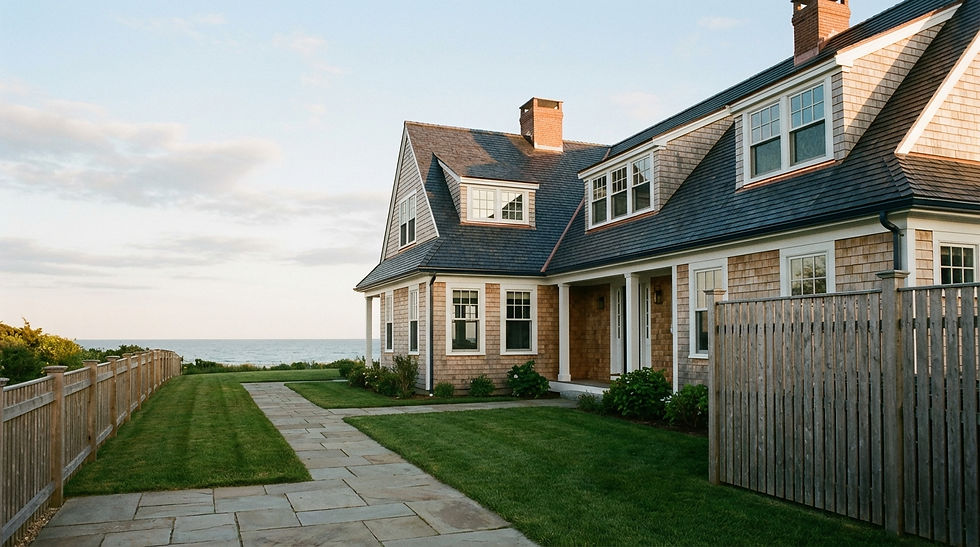
It is also worth asking about a contractor's experience with the architectural character of the region. Cape Cod and Martha's Vineyard have distinct vernacular styles, cedar shake traditions, and design sensibilities that roofing choices should support rather than undermine. This piece on coastal architectural identity captures why material selection is never just a performance decision.
Finally, understand that exterior work on coastal properties functions as a system. A new roof installed over aging siding with deteriorating flashing at the wall-to-roof junction is a partial solution. The solutions page at Millers Pro Roofing & Siding reflects a philosophy built around whole-exterior performance, not isolated repairs. That integrated approach, more than any single product or technique, is what produces long-term outcomes on high-exposure coastal properties.
For homeowners on Martha's Vineyard and on Cape Cod, the investment in a properly timed, properly executed roof replacement is one of the most direct ways to protect a property from the particular demands of this environment. The calendar question is real, but it is ultimately secondary to the quality of the decision and the contractor behind it.


Comments